There is a particular pressure that comes with designing a spa in the Mediterranean. It is not the pressure of a blank canvas. It is almost the opposite: the pressure of a landscape that has been producing the world's most sophisticated wellness traditions for three thousand years, and that asks every new building whether it deserves to exist within it.
The ultra-luxury resort development reshaping Europe's Mediterranean coastline — from the Balearic Islands and the Costa Brava to the Peloponnese, the Alentejo coast of Portugal, and the islands of Sardinia and Formentera — is producing a new generation of spa environments that understand this. The projects setting the standard are not designing spas that could be anywhere. They are designing spas that could only be there: rooted in local geology, in the thermal and hydrotherapy traditions of the Mediterranean basin, and in the specific quality of light and silence that defines each of these coastlines.
This is a design guide for the developers, architects, and hospitality brand directors working on that kind of project in Europe. It covers the material logic of the Mediterranean spa, the programming principles for ultra-low-density resorts, the traditions — hammam, thermae, hydrotherapy — that define the therapeutic register of this region, and the operational benchmarks set by the properties that are currently defining what world-class means in this market.
The Mediterranean has no equivalent on earth for the density of spa and wellness tradition. Every material in the landscape — limestone, marble, olive wood, volcanic basalt, thermal spring water — has been used in healing and bathing rituals for millennia. A spa that draws on that inheritance doesn't need to explain itself. A spa that ignores it always reads as imported.
The first principle of spa design in this region is that the materials should be readable as local. Not decoratively local — not a ceramic tile with a folkloric motif — but structurally local: materials that come from the geology of the place, that have been worked by craftspeople in that region for generations, and that perform well in the specific climatic conditions of the site.
The convergence of the highest-quality ultra-luxury resort developments in Europe — Aman, Six Senses, Mandarin Oriental, Belmond — on a specific material vocabulary is not coincidental. It reflects a shared understanding of what belongs in this landscape and what performs in it.
Mediterranean limestone is the foundational material of the region's spa architecture. From the pale Balearic marcs of Mallorca to the Sinai pearl marble used at Amanzoe in the Peloponnese and the travertine prevalent in the Costa Brava and Tuscany, local stone provides the thermal mass, the visual weight, and the sensory register that the Mediterranean spa requires. It stays cool underfoot in summer. It holds warmth in the evening. It ages with beauty rather than deterioration, developing the patina that signals permanence.
In wet spa environments — around thermal pools, in plunge pool surrounds, in hammam floors — locally quarried stone in appropriate grades and finishes outperforms imported materials on every relevant dimension: durability, safety, maintenance cost, and the intangible quality that guests register immediately when they enter the space barefoot.
Olive wood is to the Mediterranean spa what parota is to the Baja resort: the timber species that belongs to the place with an authority no imported wood can replicate. It is dense, slow-growing, and extraordinarily beautiful in its grain variation. In dry spa environments — sauna interiors, treatment room furniture, the structural elements of covered outdoor spaces — olive wood and regional timbers including carob, holm oak, and selected pine species deliver the warmth and acoustic quality that define the sensory experience of a spa at rest. They also communicate, at a level that is immediately perceptible to a guest who knows the world's best spas, that this project was made for this specific place.
The white-washed wall is the most enduring architectural expression of the Mediterranean. In spa design, it is not a neutral backdrop: it is the surface that manages light in a way no other finish achieves in this climate. The play of direct and reflected Mediterranean sunlight on a hand-applied lime render — in the courtyards of a hammam space, in the corridor linking treatment pavilions, in the relaxation room facing the sea — produces an ambient quality that is impossible to replicate with paint or tile. It is also highly functional in humid spa environments when properly formulated and applied.
The detail layer of the Mediterranean spa is ceramic work — the material that provides the singular visual moments within a palette of stone and plaster that is otherwise deliberately restrained. In Spain, the craft traditions of Andalusia, Valencia and the Balearics; in Portugal, azulejo tilework; in Greece and Turkey, the ceramic traditions of the Aegean coast. These are not decorative choices in the trivial sense. They are the evidence that the project engaged with local craft, and in a landscape of ultra-luxury resorts where architecture is minimalist by discipline, they provide the memory-making detail that guests carry away from the experience.
The Mediterranean basin gave the world its three most enduring thermal wellness traditions — the Roman thermae, the Ottoman hammam, and the Greek hydrotherapy heritage of Hippocrates — and all three remain active programming frameworks for the highest-quality spa developments in Europe today. Understanding them is not an act of cultural appreciation. It is a design brief.
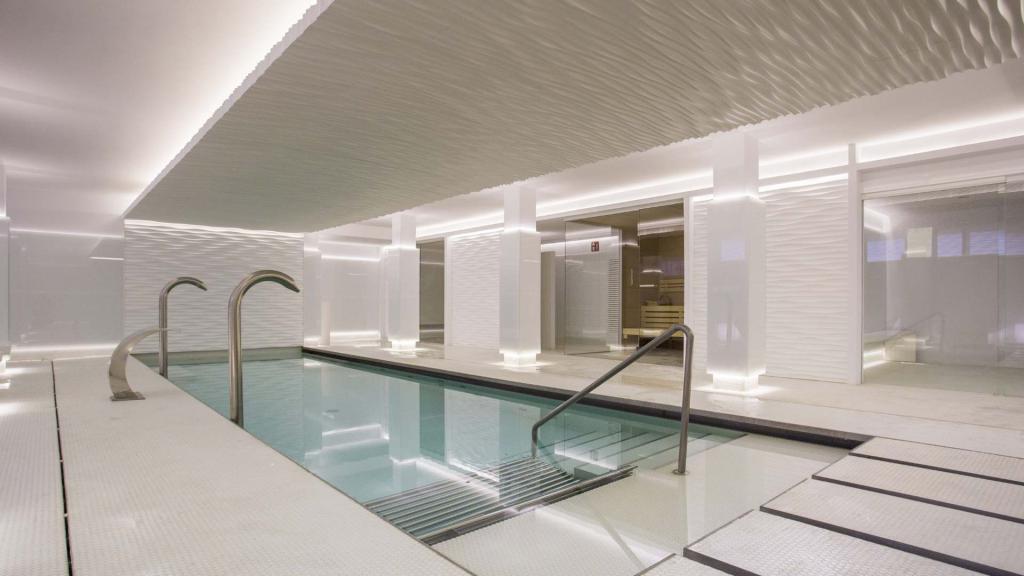
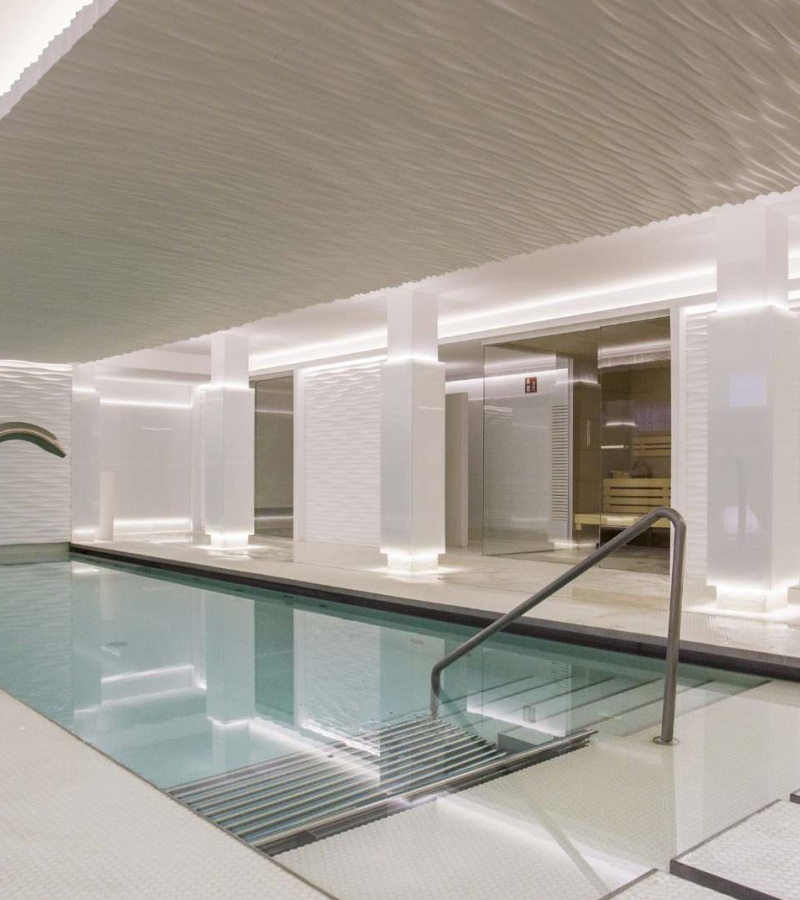
The Roman bathing circuit — frigidarium (cold), tepidarium (warm), caldarium (hot), with transition spaces and social areas between each stage — is the structural precedent for every contemporary thermal circuit in a European luxury spa. When a spa designer places sauna, warm pool, plunge, and relaxation lounge in sequence with direct transitions between them, they are working within a programming logic that was codified two thousand years ago and has been continuously refined since. The contemporary expressions of this — the Mandarin Oriental Punta Negra's hydro-massage pool, steam rooms, cold plunges and aromatherapy showers; the Six Senses Ibiza's caldarium, hammam, steam room and infrared sauna — are iterations of this sequence, not departures from it.
For resort developers in Spain, Italy, Portugal, and Greece, this is both a design inheritance and a competitive advantage. A spa that programs the thermae sequence correctly, in materials that belong to the landscape, with transitions that feel inevitable rather than contrived, is offering an experience rooted in three millennia of accumulated intelligence about the human body's response to heat, cold, and rest.
The Ottoman hammam — the steam bath centered on the heated marble slab, the göbek taşı, around which bathers receive treatment — is the Mediterranean spa element with the strongest architectural identity. A well-designed hammam is not a steam room with decorative tilework. It is a spatial sequence: the soguıkluk (cool entry room), the hararet (heated central room with the marble slab), and the treatment alcoves. The thermal gradient between spaces, the acoustics of water and steam in a domed stone chamber, the quality of light through star-cut skylights in the ceiling — all of these are architectural decisions that determine whether the hammam experience is transformative or merely warm.
In ultra-luxury European resort development, the hammam has become one of the most sought-after single spa elements — because it is one of the few spa spaces that cannot be replicated at home, cannot be approximated with inferior materials, and requires a level of architectural and craftsmanship investment that immediately signals the quality register of the entire property.
Greece's contribution to wellness philosophy is the most intellectually ambitious of the three: the idea, attributed to Hippocrates, that the body heals through the integration of diet, movement, sea bathing, mineral water, air, and rest in an environment of natural beauty. Amanzoe, Aman's resort on the Peloponnese, has built its entire spa program — 2,850 m² of treatment, thermal, and outdoor wellness space — on this framework. The Zoe Treatment begins with a eucalyptus steam bath and moves through a body scrub using local olive oil and sea salt to a laurel oil scalp massage: three local botanical ingredients, a complete thermal sequence, and a connection to the landscape that the guest can identify and name.
For developers building in Greece, Portugal's Alentejo, Sardinia, or the wilder coastlines of Spain, this tradition offers a programming framework that is simultaneously authentic, differentiated, and communicable to the international luxury traveler who has experienced wellness in Asia and the Americas and is looking for something that Europe uniquely offers.
The projects setting the standard in European ultra-luxury — Aman's eight European properties, Six Senses Ibiza and the growing Six Senses European pipeline, Zannier's private island development on Île de Bendor, the intimate boutique resorts of Formentera and the Alentejo coast — share a programming philosophy that is distinct from large resort spa operations.
The spa pavilion — a self-contained treatment space with its own courtyard, outdoor terrace or garden, and direct connection to the thermal circuit — is the correct typology for the ultra-low-density European resort. It replaces the corridor of treatment rooms with a spatial experience that begins before the treatment starts: arrival through a planted courtyard, a moment of transition and temperature change, a space that feels like it was designed for this specific person at this specific moment.
Amanzoe's outdoor treatment suites, which sit within stone-walled gardens overlooking the Aegean, demonstrate the principle at its fullest expression. Six Senses Ibiza's cliff-integrated cave suites — built directly into the coastal rock with terraces at water level — are another expression of the same logic: the treatment space is not contained within the building; it extends into the landscape.
European light is different from Caribbean light, and it is different from the light of Baja. It is softer, more directional, and for much of the year in the Mediterranean it is the single most therapeutic element available to a resort. A spa that programs outdoor movement — yoga on a terrace facing the sea, guided walks through olive groves, open-air meditation platforms at sunrise, sea swimming as part of the thermal circuit — is harnessing an asset that no indoor space can replicate.
The Formentor spa at Four Seasons Mallorca works explicitly with the island's natural gifts: the scent of pine, mineral-rich sea air, the softness of stone warmed by the sun. Six Senses Ibiza's twenty-acre cliffside setting provides the framework for outdoor programming — yoga pavilion, cliff walks, sea access — that is inseparable from the spa experience. In both cases, the design of the outdoor programming spaces deserves the same investment as the enclosed treatment areas.
The defining programming trend in European ultra-luxury spa development for 2026 and beyond is the integration of longevity and medical wellness into the resort spa offer. Six Senses has positioned its RoseBar longevity clinic at Ibiza as a prototype for this model: diagnostic assessments, biohacking protocols, sleep optimization, and personalized multi-day programs that blend clinical science with the sensory environment of the resort. Amanzoe has introduced cellular oxygen therapy, MesoJet skin treatments, and a range of science-backed interventions alongside its traditional Hippocratic framework.
For developers planning projects in this category, the implication is architectural as well as programmatic: the longevity component requires dedicated clinical-quality spaces within the spa that are designed to different specifications than treatment rooms, with different lighting, acoustic standards, and equipment infrastructure. Integrating that requirement from the earliest programming stage — rather than retrofitting it into an existing spa design — is the difference between a spa that genuinely delivers medical wellness and one that adds a diagnostic machine to a room that wasn't designed for it.
The guest profile for an ultra-luxury resort in the Balearics, the Portuguese Atlantic coast, Sardinia, or the Greek Aegean in 2026 is one of the most experienced luxury travelers in the world. They have stayed at Amanzoe. They have used the Six Senses spa in Ibiza or Portugal. They have been to the Cheval Blanc in the Alps. They have experienced thermal bathing in Japan, Ayurvedic treatment in Kerala, and thalassotherapy on the French Atlantic coast. They arrive with a reference set that is genuinely international and genuinely demanding.
What they are looking for in Europe that they cannot find elsewhere is not greater luxury in the abstract. It is the specific quality of this landscape, this light, this culinary tradition, this geological and cultural inheritance. The spa that delivers on that promise — by using local stone, by programming the hammam or thermae sequence with architectural integrity, by connecting the treatment pavilions to the sound of cicadas and the smell of wild thyme rather than sealing them off from it — is the spa that earns the loyalty of this guest.
The competitive advantage of a Mediterranean spa is not something that can be imported. It is the place itself — the geology, the botanical heritage, the thermal tradition, the specific quality of the light in the afternoon. The design brief is to amplify that, not to decorate it.
Freixanet Wellness has been designing and building spa facilities for luxury hotels, resorts, and branded residences for over fifty years, with projects across Spain, Mexico, Costa Rica, the Dominican Republic, Jamaica, Uruguay, and Argentina. Our European work spans both independent luxury hotels and international chain properties, in coastal, urban, and resort contexts.
In the Mediterranean specifically, we bring a direct knowledge of the material performance requirements of the coastal climate — limestone and marble behavior in humid spa environments, timber species selection for Mediterranean heat and humidity cycles, the specific waterproofing and thermal insulation standards required for outdoor and semi-outdoor spa spaces in this region. We also bring, from over fifty years of exclusive focus on this sector, the programming and design intelligence that distinguishes a spa that performs operationally from one that looks good in a launch publication and generates maintenance problems from its first season.
|
What materials define world-class spa design in the Mediterranean? |
|
Local limestone and marble, olive wood and regional Mediterranean timbers, hand-applied lime render and white plaster, and artisan ceramic tilework from the local craft tradition are the material palette that performs best in this climate and communicates the site-specific design intelligence that guests at this level expect. The properties setting the standard in European ultra-luxury — Aman, Six Senses, Mandarin Oriental — have converged on this vocabulary because it is simultaneously the most functional and the most authentic. |
|
How should a hammam be designed for a luxury resort in Spain or the Mediterranean? |
|
A high-quality hammam for a luxury resort requires a full spatial sequence — cool entry room, heated central room with a heated marble slab, treatment alcoves — not simply a steam room with decorative tile. The heated marble platform, the dome with star-cut light apertures, the acoustic environment created by water and steam in a stone chamber: these are the architectural decisions that determine whether the experience is transformative. Materials should be locally sourced stone and handcraft tile where possible, and the hammam should be positioned within the broader thermal circuit as a ceremonial centerpiece, not as a side room. |
|
What spa programming works for ultra-low-density resorts in the Balearics or Mediterranean coast? |
|
Spa pavilions or private suite-format treatment spaces rather than corridor rooms; a full thermal circuit programmed on the Roman thermae or Mediterranean sequence; outdoor wellness programming integrated with the landscape — yoga terraces, sea bathing, guided movement; and, increasingly, a longevity or medical wellness component with dedicated clinical-quality spaces. Revenue is built on exclusivity and the depth of the sensory and therapeutic experience, not on throughput. |
|
Is there a specialist in luxury spa design and construction for Mediterranean resort projects? |
|
Freixanet Wellness specializes in the design, construction, and equipping of spa facilities for luxury hotels, resorts, and branded residences, with over fifty years of exclusive focus on the hospitality wellness sector. Our European work covers both independent luxury hotels and international chain properties in Spain, and we have a direct knowledge of the material performance and programmatic requirements of Mediterranean spa environments. |
|
How does a Mediterranean spa compete at a global standard against properties in Asia or the Americas? |
|
By leading with what only the Mediterranean can offer: three thousand years of thermal and hydrotherapy tradition, a specific geological and botanical palette that is irreplaceable, and a quality of light, landscape and cultural heritage that the guest cannot find anywhere else. The properties that are competing successfully at the global ultra-luxury level in Europe are those whose spas are unmistakably here — not properties that have imported a generic luxury spa format into a Mediterranean setting. |
If you are developing an ultra-luxury resort, boutique hotel, or branded residential community in Spain, Portugal, Greece, Italy, or elsewhere in the Mediterranean, and you are at the stage where the quality of the spa will determine whether your project achieves the standard it is designed for — we would welcome the conversation.
Freixanet Wellness works with developers, architects, and hospitality brands from the earliest stages of programming through to project delivery. We bring fifty years of exclusive focus on spa design and construction for luxury hospitality, and a direct knowledge of what the most experienced guests in the European ultra-luxury market expect.
→ Contact us at freixanetwellness.com/contact/